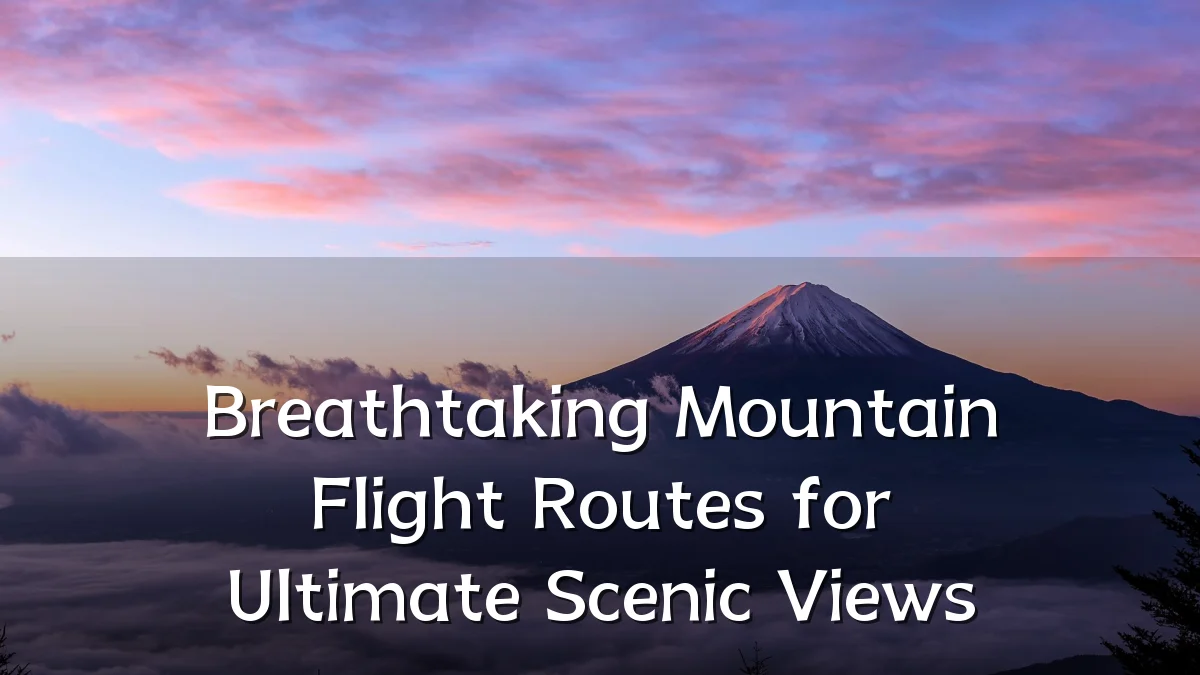
Breathtaking Mountain Flight Routes for Ultimate Scenic Views
Recent Trends in Mountain Flight Tourism
Over the past several years, demand for scenic mountain flights has risen steadily among travelers seeking unique perspectives on iconic ranges. Operators in regions such as the Himalayas, the Alps, and the Andes have expanded short-duration sightseeing routes that combine dramatic topography with increased accessibility. Recent interest has also shifted toward multi-stop itineraries that allow passengers to experience multiple mountain ecosystems within a single journey, often with intermediate landings at high-altitude airstrips.
Background: How Mountain Flight Routes Evolved
Scenic mountain flights originally emerged as charter services for mountaineers and surveyors. As aviation technology improved and aircraft became more reliable at high altitudes, commercial sightseeing carriers began offering scheduled routes over peaks such as Mount Everest, the Matterhorn, and Aconcagua. Today, both fixed-wing aircraft and helicopters serve routes that range from 30-minute loops to multi-hour experiences crossing entire ranges. Key background factors include regulatory developments in airspace management, safety protocols for high-altitude operations, and the growing role of small regional airports in remote mountain communities.

User Concerns When Choosing a Mountain Flight
- Weather variability: Mountain weather can change rapidly; many flights are subject to last-minute cancellations or route adjustments. Travelers should build flexible itineraries and consider booking with operators that offer clear rebooking policies.
- Altitude and physical comfort: Cabins in unpressurized aircraft may cause discomfort for those sensitive to altitude. Passengers with respiratory conditions should consult their physician and choose pressurized options where available.
- Visibility and seasonality: Peak visibility often occurs in late autumn and early spring, while summer monsoon or winter storms reduce clarity. Researching typical weather windows for each destination is critical.
- Cost versus value: Prices vary widely by route length, aircraft type, and included services. Some shorter flights provide comparable views to longer ones at lower cost; comparing route descriptions and passenger reviews helps assess value.
Likely Impact on Travel and Local Economies
The expansion of mountain flight routes is likely to generate increased visitor traffic to remote communities that depend on tourism. Local economies can benefit from direct spending on flights, accommodation, and ground transfers. However, the environmental impact of additional aircraft emissions and noise in sensitive alpine areas may prompt stricter regulations. Operators are already experimenting with hybrid-electric aircraft to reduce carbon footprints, a trend that could reshape route availability and pricing over the next decade.
For travelers, the growing number of routes means more choices and potentially lower prices in competitive markets. Yet demand may also lead to overcrowding at popular scenic corridors, prompting some operators to implement booking limits or seasonal caps.
What to Watch Next
- New route certifications: Several countries are evaluating proposals for mountain flights over protected areas such as national parks. Outcomes of these regulatory decisions will determine future access to currently restricted zones.
- Technological improvements: Advances in electric and hybrid propulsion for small aircraft could reduce noise and emissions, making mountain flights more sustainable and potentially opening quieter routes.
- Integration with ground experiences: Package deals combining scenic flights with hiking, lodging, or cultural tours are emerging. Travelers should watch for bundled offerings that simplify planning.
- Insurance and liability frameworks: As adventure travel evolves, insurance products specifically covering scenic flight cancellations or emergency high-altitude evacuation may become more common, influencing traveler confidence.